
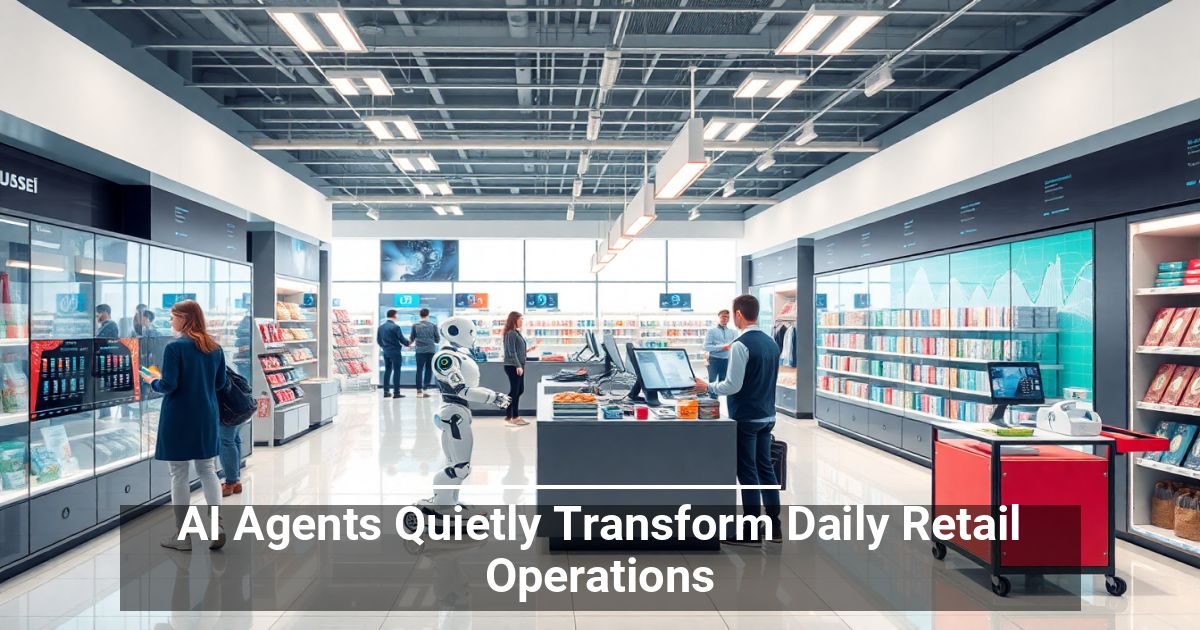
 Retail is changing fast, but not always in loud or flashy ways. Behind the scenes, AI agents in retail operations are doing the quiet, repetitive tasks that keep stores running smoothly. And according to a new Fluent Commerce report, more than two-thirds of retailers are already piloting or partially implementing agentic AI.
Even more striking, 71% expect these tools to boost operational efficiency as soon as next year. However, despite their enthusiasm about this potential, most retailers are still in the early phases of their AI journey.
The Gap Between “We’re Trying It” and “It’s Changing Everything”
Right now, most business owners rely on artificial intelligence for the less glamorous work of running a store, like automating stock checks, predicting demand shifts, and flagging slowdowns before customers notice. This type of retail process automation is essential as stores juggle tight margins and rising expectations.
Some retailers are already seeing real benefits. About 12% report a substantial impact from their AI-powered workforce, especially in areas that rely on predictive analytics, such as restocking and staffing adjustments.
Why Most Retailers Still Feel “Not Quite Ready”
If the technology is so promising, why are so few retailers fully adopting it? The report points to several roadblocks:
- Data quality that makes predictions shaky. Even the best AI agent can’t fix messy spreadsheets from 2018.
- Skill gaps that make teams unsure how to maintain AI tools.
- Fragmented legacy systems that don’t play nice with modern AI tools.
- Limited visibility, hiding the value of early results.
These challenges explain why only a small percentage feel their AI deployments are truly optimized. Yet they’re also the kinds of obstacles that you can tackle with the right plan. Smart leaders fix this by starting small, showing quick wins, and reframing AI as a teammate, not a replacement.
What Business Owners Can Do Right Now
Even if AI feels out of reach, retailers can take practical steps today to build momentum.
- Start with one measurable process. Pick a broken process that everyone complains about, like inventory checks, customer inquiries, or order tracking, and allow an AI agent to handle the repetitive work. Early wins build internal confidence and help teams get comfortable with the technology.
- Focus on clean, consistent data. AI thrives on accuracy. Improving data hygiene alone can dramatically boost performance and reduce errors across your digital transformation initiatives.
- Align your AI goals with customer experience. Many retailers use AI simply to cut costs. But some of the biggest payoffs happen when AI is used for customer experience optimization, like personalizing support.
- Evaluate your tech stack for long-term flexibility. As AI capabilities expand, systems that can scale and integrate easily will become invaluable.
The Quiet Shift Is Already Underway
AI agents in retail operations aren’t taking over storefronts or replacing staff. They’re quietly weaving themselves into daily workflows, strengthening the backbone of modern retail. Those who embrace this early will be the ones who pull ahead as the technology matures.
The transformation is happening. For most businesses, the question isn’t if AI will reshape retail but how quickly you’ll take advantage of it.

